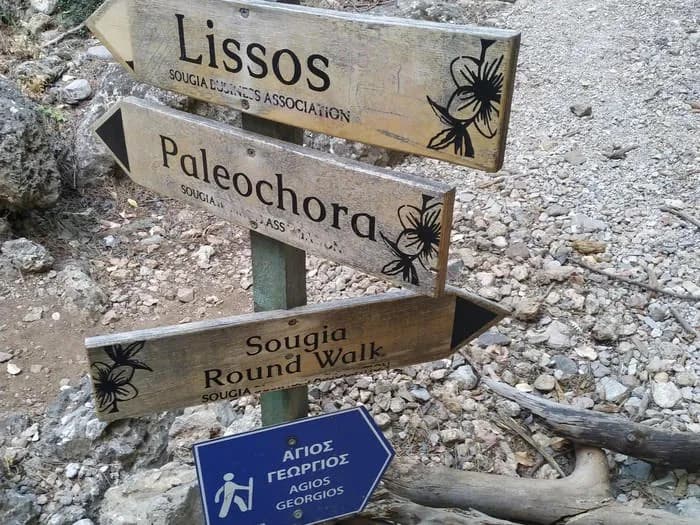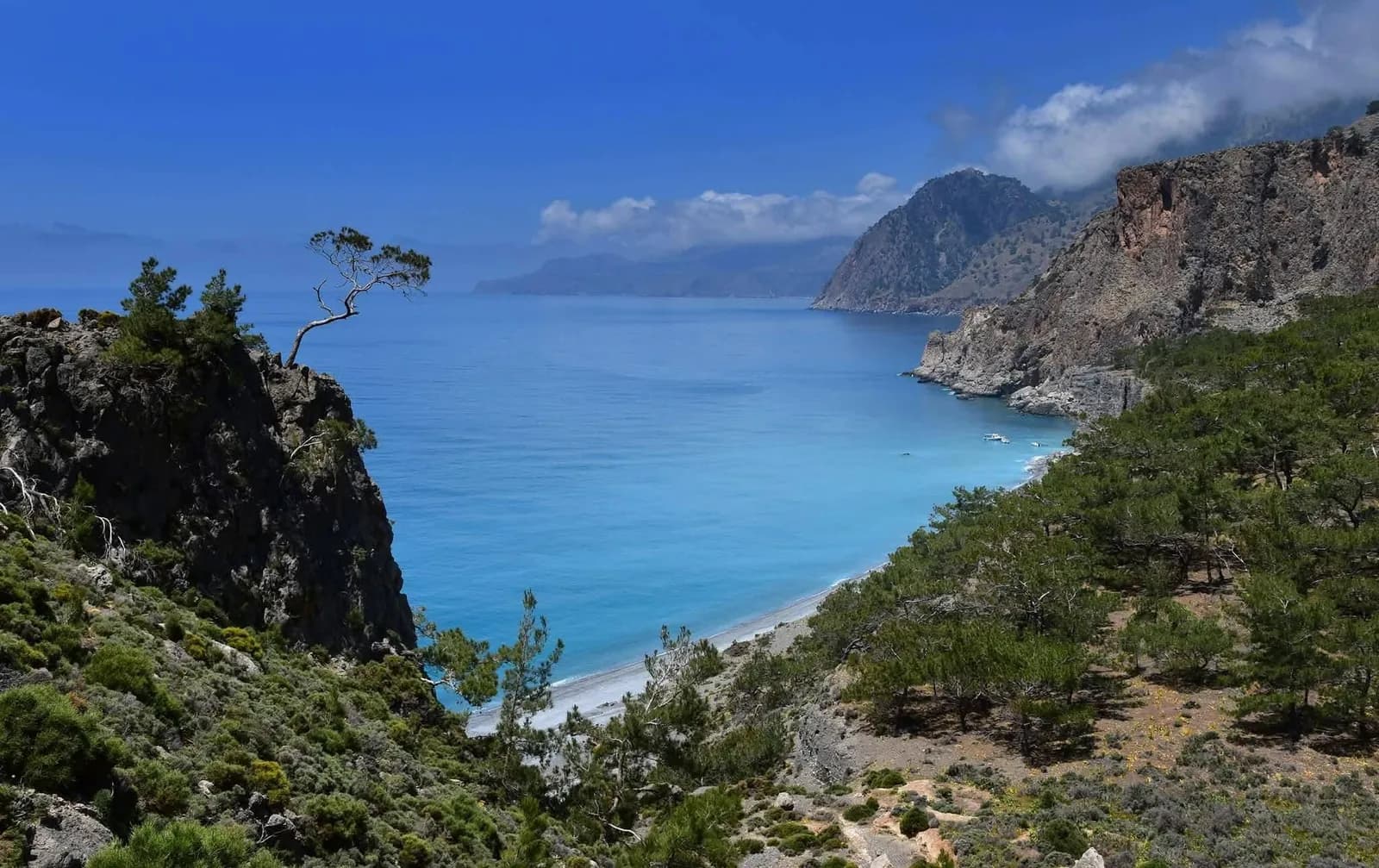
The walk from Paleochora to Sougia is a coastal section of the European E4 path in southwest Chania. It is about 15 to 16 kilometres long and takes most walkers 5 to 6 hours. Halfway along it drops into Ancient Lissos, a Hellenistic sanctuary of Asclepius in a bay with no road, then finishes through a short gorge at Sougia.
Below are the real numbers, the route, what to see at Lissos and how to get back. Crete it! organises guided hikes in Crete from Kalyves, Apokoronas, and this is one of the coastal routes we walk with groups.
Key takeaways
- About 15 to 16 km, 5 to 6 hours with stops, around 500 m of total climbing, highest point near 260 m.
- Moderate: not technical, but long, rocky in places and very exposed to the sun before Lissos.
- Ancient Lissos is the highlight: the Asclepius sanctuary with its mosaic floor, a spring, vaulted tombs and a quiet pebble beach.
- It is a one way walk. Plan the return from Sougia before you start: evening ferry to Paleochora, bus or your own transport.
The route at a glance
| Start | Paleochora, eastern side of the town, along the coast road towards Anydri and Gialiskari beach |
| Finish | Sougia, on the Libyan Sea |
| Distance | About 15 to 16 km. Published figures range from 14.5 km to 16.7 km |
| Walking time | 5 to 6 hours including stops |
| Climbing | About 530 m up and 530 m down in total, highest point around 260 m |
| Difficulty | Moderate, long and exposed rather than technical |
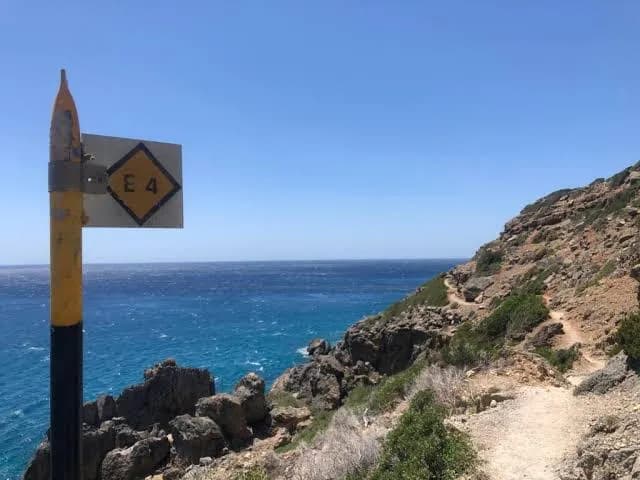
| Waymarking | E4 poles and markers along the route |
| Water | Spring at Lissos only. Carry 2 to 3 litres per person |
| Season | Spring and autumn are best. Midsummer is very hot |
| Getting back | Ferry from Sougia to Paleochora, KTEL bus to Chania, or arranged transport |
| Highlights | Cape Flomes views, Ancient Lissos and its bay, the Lissos gorge into Sougia |
How long is the Paleochora to Sougia hike?
Plan on 5 to 6 hours from Paleochora to Sougia. Outdooractive gives about 4.5 hours of pure walking, but you will stop on Cape Flomes and for a swim and the ruins at Lissos.
The walk splits into two unequal parts. Paleochora to Lissos is about 11 kilometres and takes most of the day. Lissos to Sougia is short, about an hour and a half over the plateau and down the gorge. For a shorter day, walk from Sougia to Lissos and back.
The route step by step
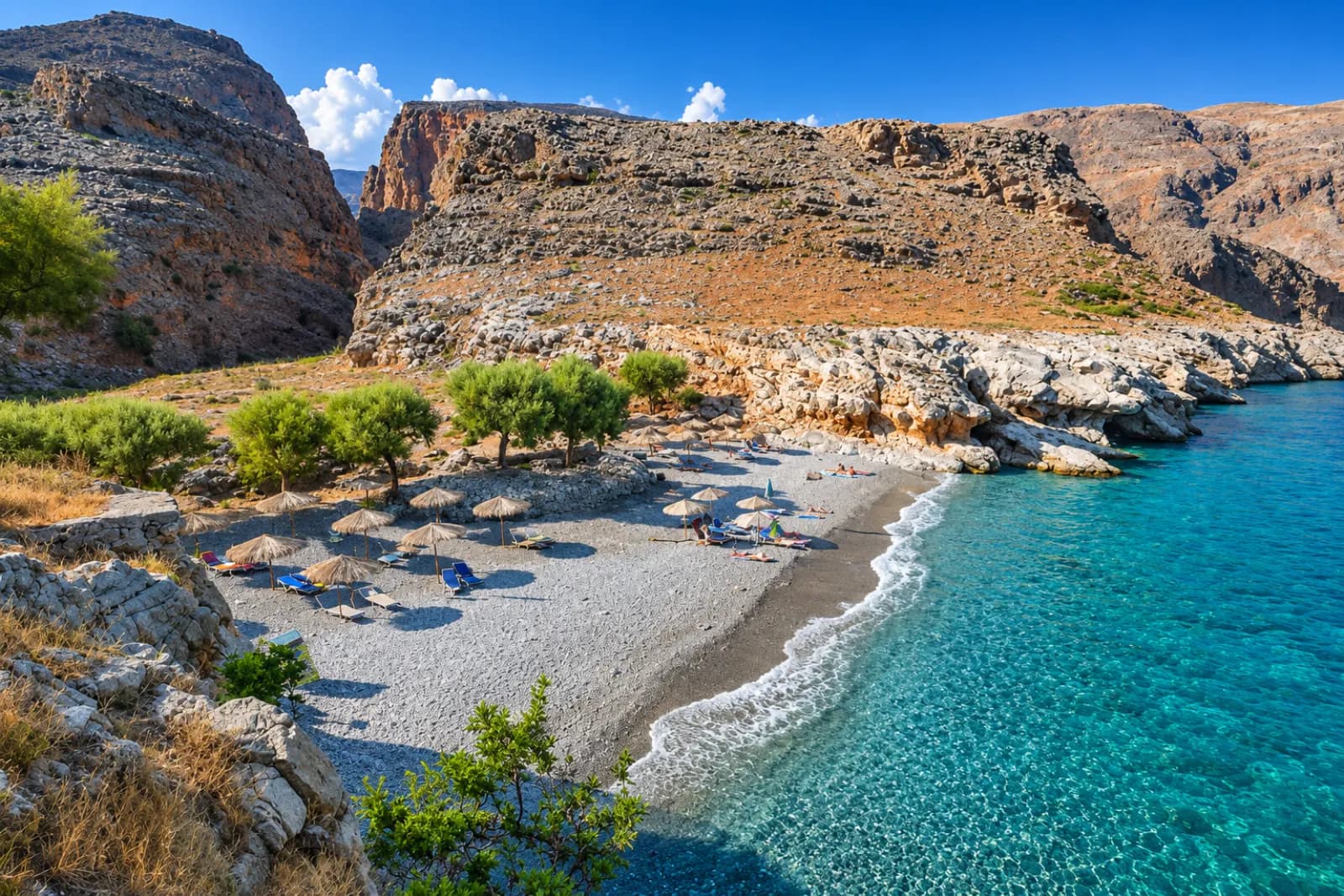
Paleochora to Anydri beach. Leave Paleochora heading east along the waterfront, past the cemetery and the campsite, about 1.5 kilometres from the port. The E4 then follows the asphalt road and a dirt road down to the coast at Anydri and Gialiskari beach. This first hour is easy walking on tarmac and track.
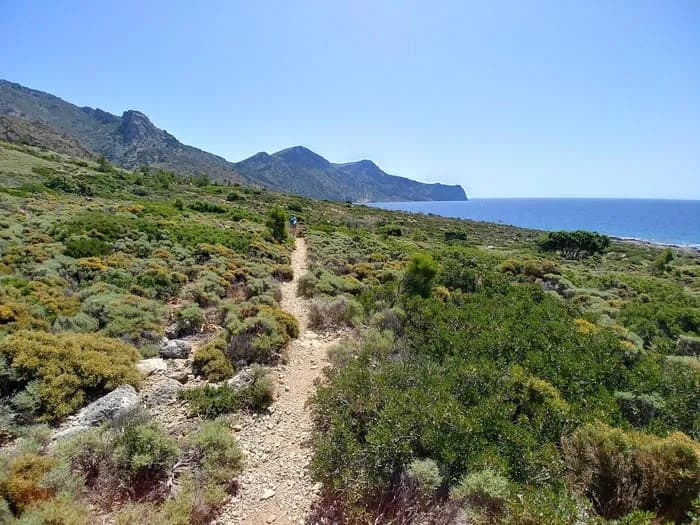
Anydri to Cape Flomes. About ten minutes past Anydri beach the E4 poles lead onto the rocks of Plaka cape. From here it becomes a narrow, rocky trail with some short scrambling above the sea, climbing over Cape Flomes for the best view back to Paleochora.
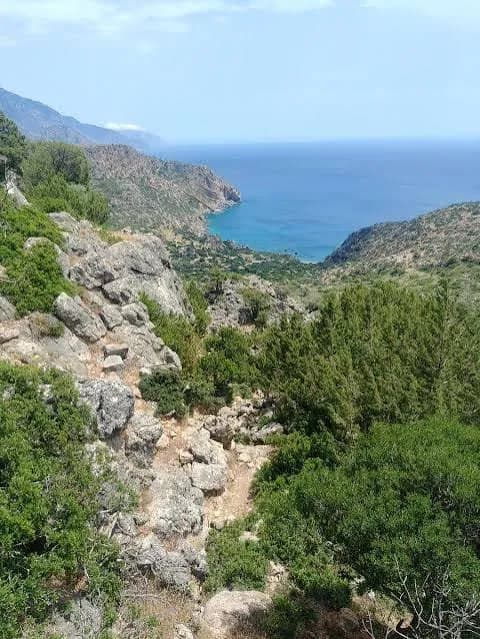
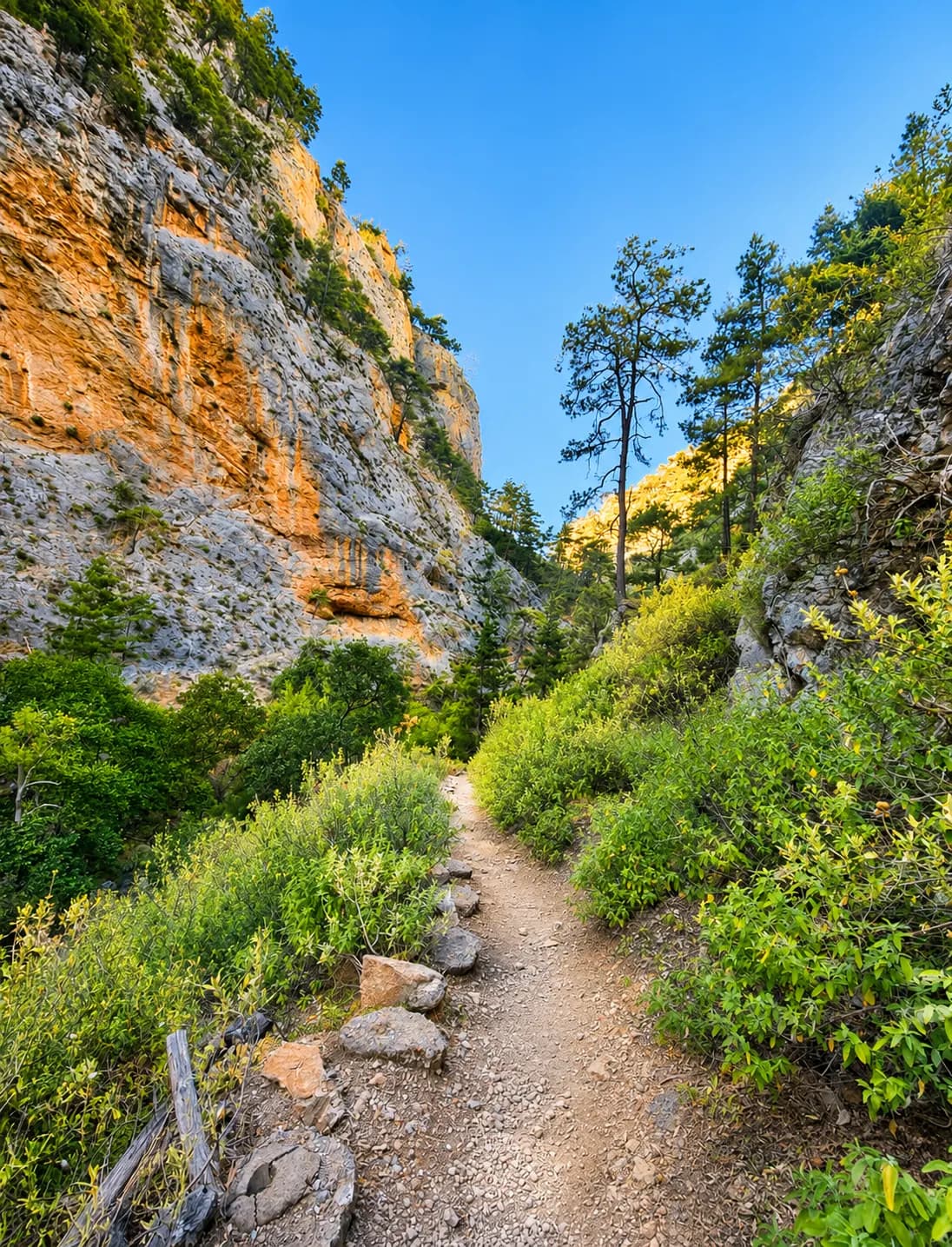
Cape Flomes to Lissos. After the cape the route crosses open, treeless ground before a wide track heads east and drops into the valley of Lissos. About 50 metres before the beach there are trees for shade and the spring, the only reliable water on the route.
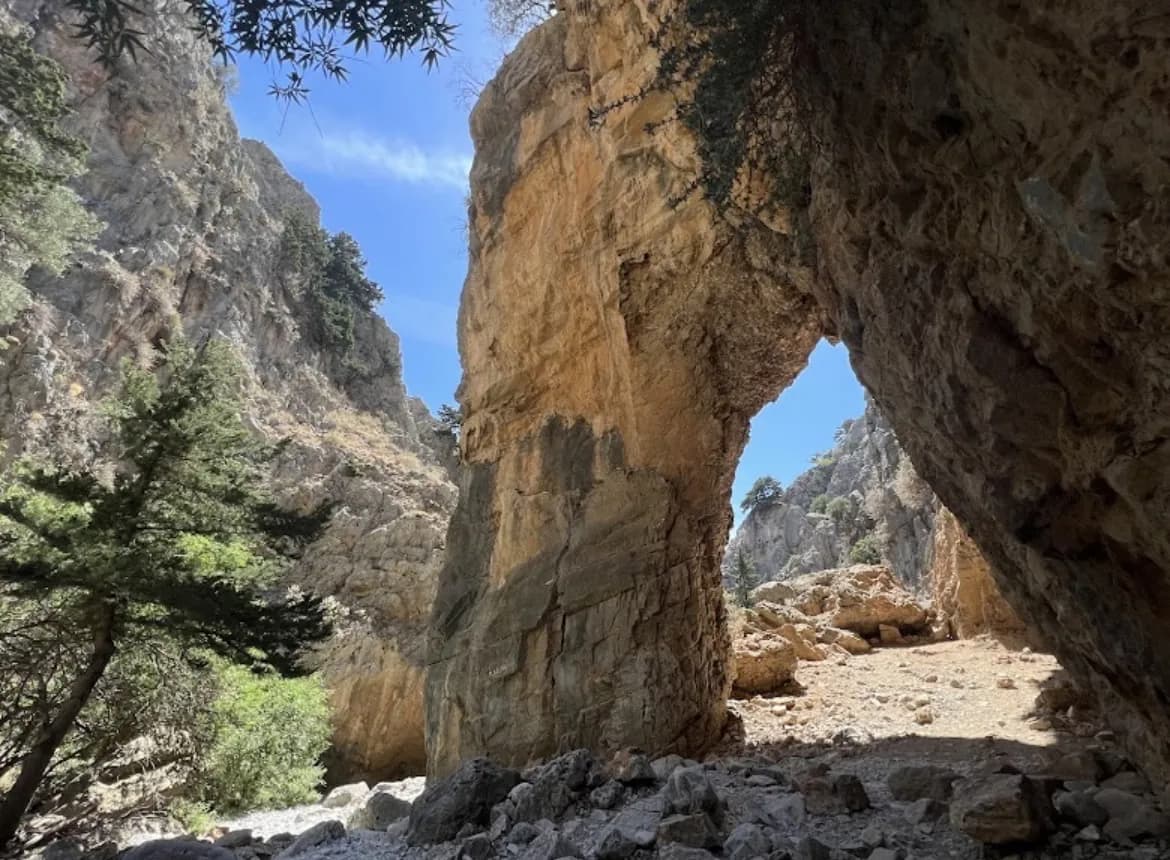
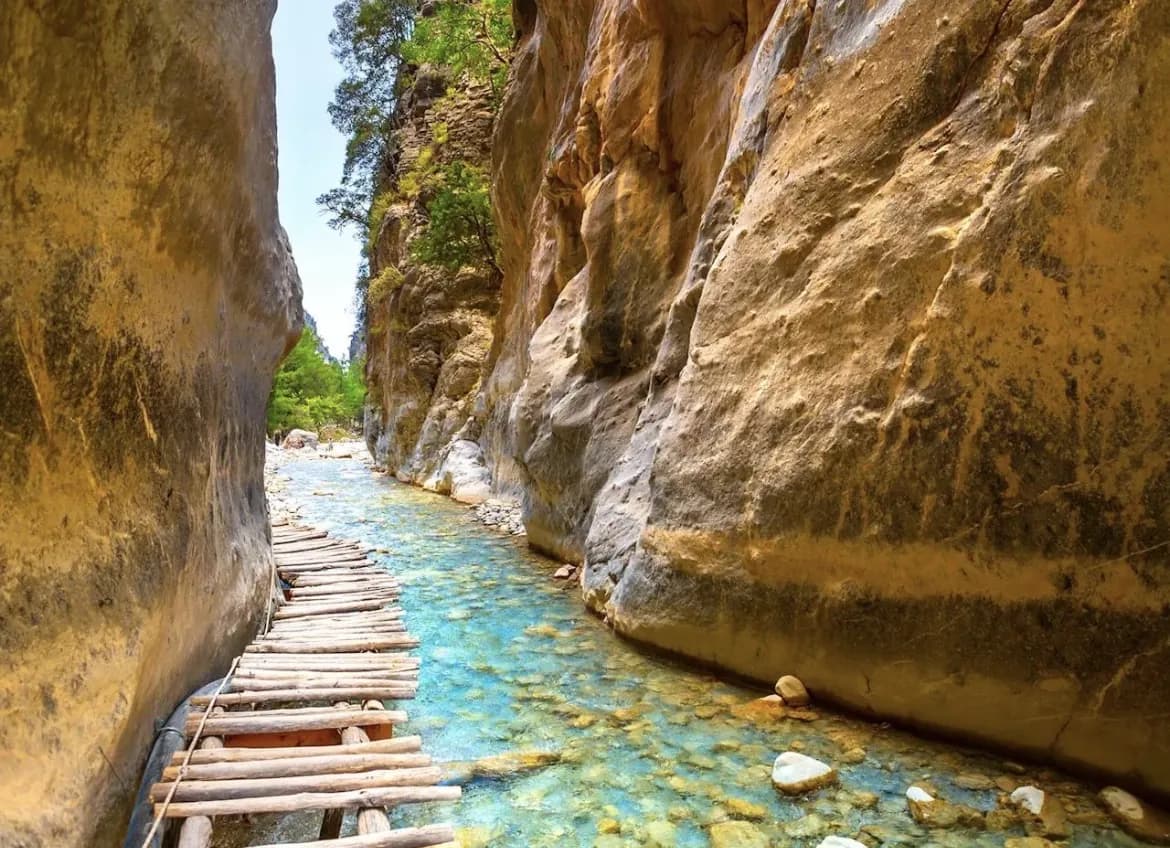
Lissos to Sougia. From the ruins a zigzag path climbs to a small plateau with pine trees, then drops into the Lissos gorge. Follow the gorge down to the sea, about 30 minutes, then turn left at the exit and follow the coast road into Sougia, about 10 more minutes.
Ancient Lissos: what you will see
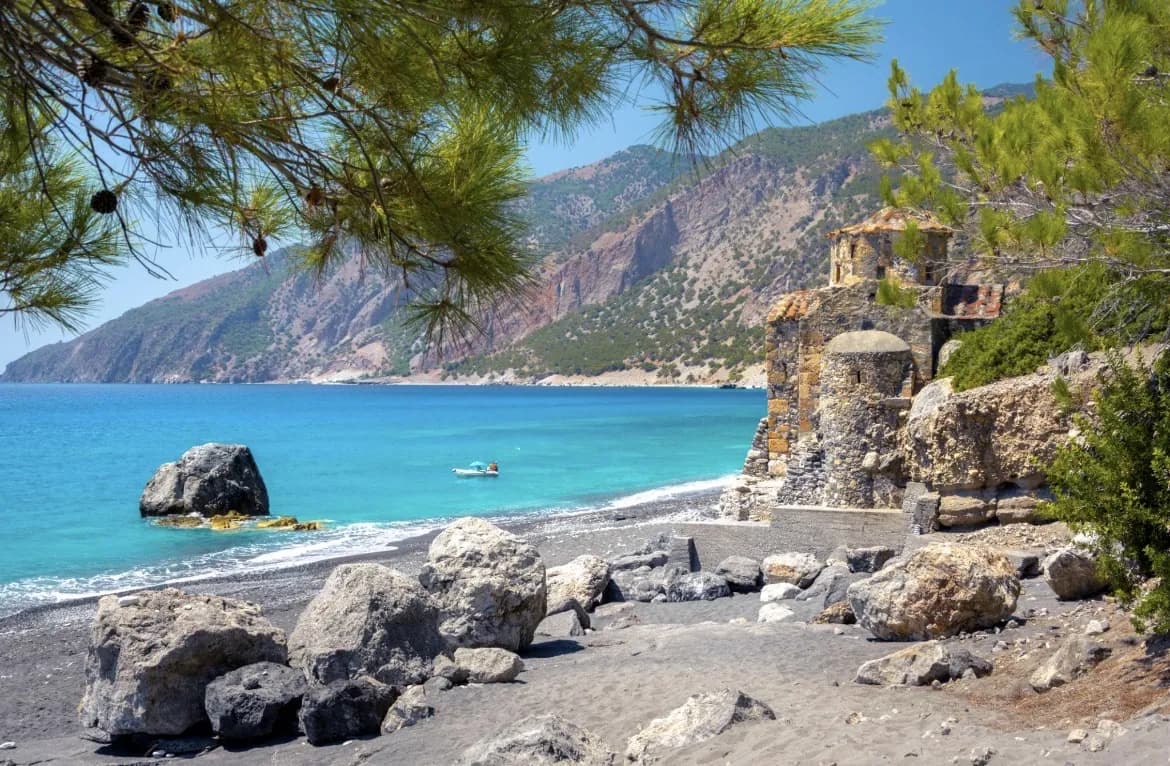
Lissos was one of the two harbours of the ancient city of Elyros, the other being Syia, today’s Sougia. It flourished from the Classical period into late antiquity. Today nobody lives there, and you arrive on foot or by boat.
- The Asclepieion. A sanctuary of Asclepius, the god of healing, dating from the Hellenistic period. Its floor mosaic with animals and geometric patterns is still partly preserved.
- The healing spring. The sanctuary was built around a spring whose water was used for treatment, with the remains of Roman baths nearby.
- The necropolis. Around the site is a Roman necropolis of vaulted tombs, built in stone with rectangular plans.
- Chapels and theatre. The chapel of Panagia stands on the site of an early Christian church, and there is a small chapel of Agios Kyrikos. Remains of a theatre and aqueduct were found in excavations.
Give yourself at least an hour on site and bring swimwear: the pebble beach below the ruins can only be reached on foot or by boat, so it is rarely busy.
Difficulty, water and shade
This is a moderate hike. There are no exposed climbing sections and the E4 is marked, but the length, the rocky path after Anydri and the heat add up. You need reasonable fitness and shoes with good grip.
Shade is the real issue. From Paleochora to Lissos the route is almost completely open, with no trees on the higher ground. Carry 2 to 3 litres of water per person, a hat and sun protection, and start early in the morning. The spring at Lissos is the only water point, so do not plan to refill before it.
Getting back from Sougia
The hike is one way, so plan the return first:
- Ferry to Paleochora. ANENDYK runs the south coast boats that link Paleochora, Sougia, Agia Roumeli, Loutro and Chora Sfakion. In the 2026 timetable there was an evening sailing from Sougia back to Paleochora at around 18:25. Days and times change with the season, so check anendyk.gr before you go.
- Bus to Chania. KTEL Chania runs buses on the Chania to Sougia route. Check the current timetable on e-ktel.com, as summer schedules change often.
- Taxi boat or road transport. Local taxi boats can be arranged between Lissos and Sougia, or you can arrange a car pick up in Sougia.
Another option is to turn it around: take the morning boat from Paleochora to Sougia and walk back west, so the car is waiting at the end.
Best time to walk it
Spring and autumn are the best seasons. Spring brings green hills and flowers, autumn still has warm sea at Lissos. In June, July and August the exposed first half of the route gets very hot from mid morning, and heat can be a problem even in early June. In summer, start at first light.
Continuing east on the E4
Paleochora to Sougia is the first of the classic E4 coastal stages east of Paleochora. From Sougia the path continues to Agia Roumeli, a much harder day described in our guide to Sougia to Agia Roumeli. Agia Roumeli is also the exit of the Samaria Gorge, and further east the E4 reaches Loutro and Chora Sfakion. For a gentler day try Imbros Gorge or Agios Ioannis to Marmara and Loutro, or see the island on wheels with our quad safari.
What to bring
- Water (2 to 3 litres per person), more in summer, the only spring is at Lissos
- Hiking shoes with good grip
- Backpack
- Sunscreen
- Hat
- Light snack
- Camera
- Sunglasses
- Swimwear for Lissos
Hiking Paleochora to Sougia with Crete it!
We are based in Kalyves, Apokoronas, and we organise guided nature hikes across Crete. On a linear route like this, the main advantage is simple: you start in Paleochora and finish in Sougia without having to solve the transport and timetable puzzle yourself,.
What is included
- An experienced mountain guide who stays with the group for the whole hike
- Transport, with pick up from Chania town and its suburbs, Stalos, Agia Marina, Platanias and the whole Apokoronas area
- Entrance tickets and ferry tickets where needed
- Hiking equipment: safety helmets where required and trekking poles
All of this at no extra charge. There is no fixed price: we quote per group, depending on group size, season, any extras you want to add and the difficulty of the route.