Walk around the old harbour of Chania and you are looking at Venice. The stone quays, the long vaulted shipyards and the lighthouse at the end of the breakwater all date back to the centuries when Crete was ruled from the lagoon city. That period lasted more than four and a half centuries and left its mark across the island.
The Kingdom of Candia
After the Fourth Crusade broke up the Byzantine Empire in 1204, Venice acquired Crete. It took several years to push out its Genoese rivals, and Venetian rule was established from around 1211. The island was called the Regno di Candia, the Kingdom of Candia, after its capital, today's Heraklion. Crete mattered to Venice for its position on the sea routes to the east and for its wine, oil and grain.
Venetian rule was often harsh, and Cretan landowners and villagers rose up many times. Over the centuries, though, Greek and Venetian cultures mixed. The result was the Cretan Renaissance. It gave us the epic poem Erotokritos by Vitsentzos Kornaros and painters such as Domenikos Theotokopoulos, who was born in Candia and later became famous in Spain as El Greco.
What the Venetians built
Venice ruled through its harbours and walls, and many of them still stand:
- Chania harbour. The breakwater, the arsenals where galleys were built and repaired, and the lighthouse. The lighthouse took its present form in the 19th century, rebuilt on the Venetian base.
- Rethymno Fortezza. A large fortress on the hill above the old town, built in the late 16th century after pirate raids showed how exposed the town was.
- The walls of Candia. Massive bastions designed to resist artillery, which still ring the centre of Heraklion.
- Frangokastello. A square castle on the Sfakia coast, built in the 14th century to keep watch over a rebellious region.
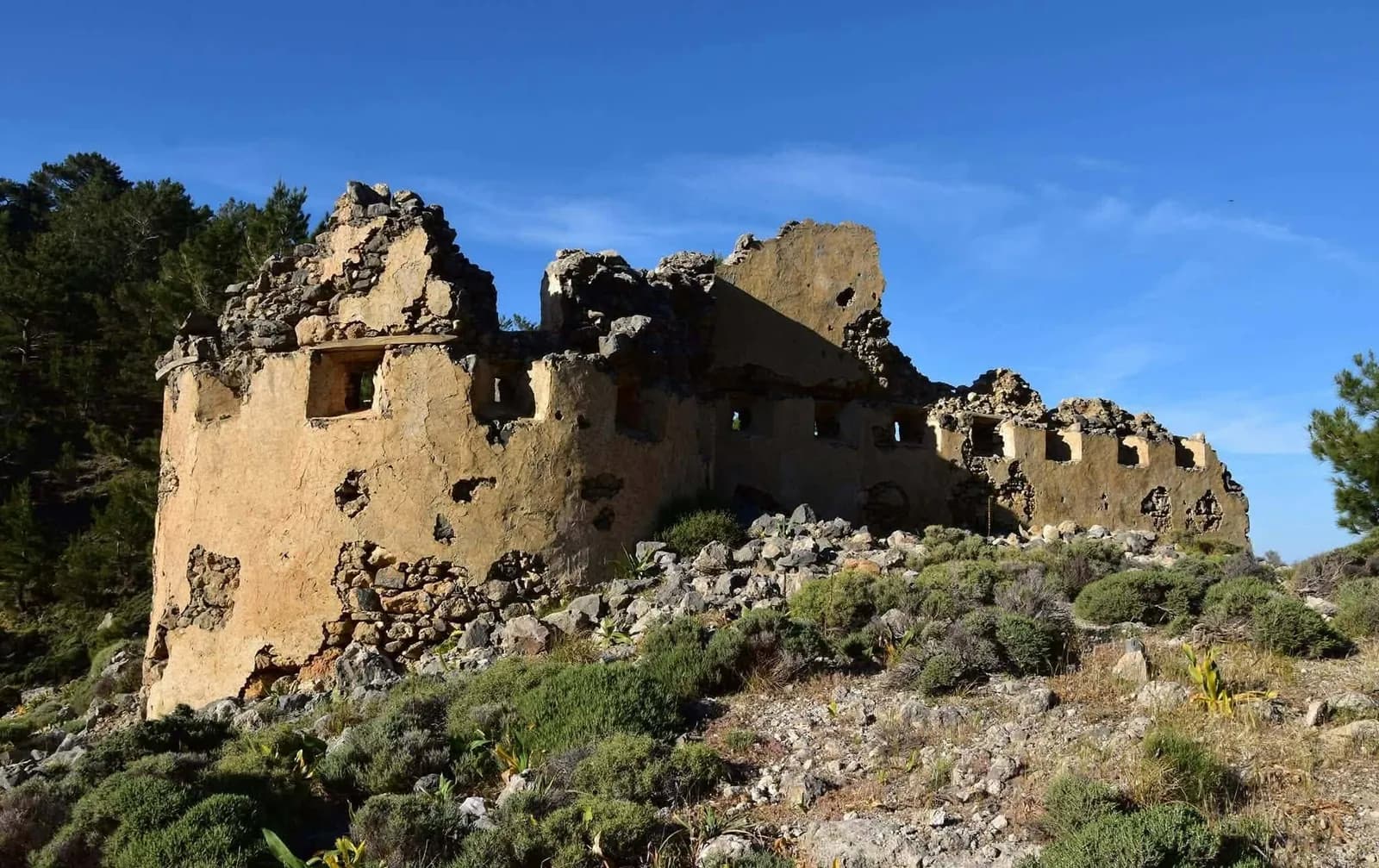
The south coast was harder to defend, with few harbours and steep mountains behind. Small forts and watchposts stood above important landing places. Above Agia Roumeli, at the mouth of the Samaria Gorge, the ruins of a small stone fort still crown a hill over the sea. This one is usually dated to the later Ottoman period, a reminder that the same strategic spots were guarded by one ruler after another.
The long siege of Candia
In 1645 an Ottoman army landed in western Crete. Chania fell that year and Rethymno soon after. Candia held out behind its great walls. The siege began in earnest in 1648 and lasted around twenty-one years, one of the longest in history. Volunteers and soldiers from many parts of Europe came to help defend the city. In 1669 the Venetian commander Francesco Morosini finally agreed to surrender, and the defenders were allowed to leave by sea.
Venice held on to a few small island fortresses, such as Souda, Spinalonga and Gramvousa, for some years more. Crete itself, however, now belonged to the Ottoman Empire.
Walk past the old walls
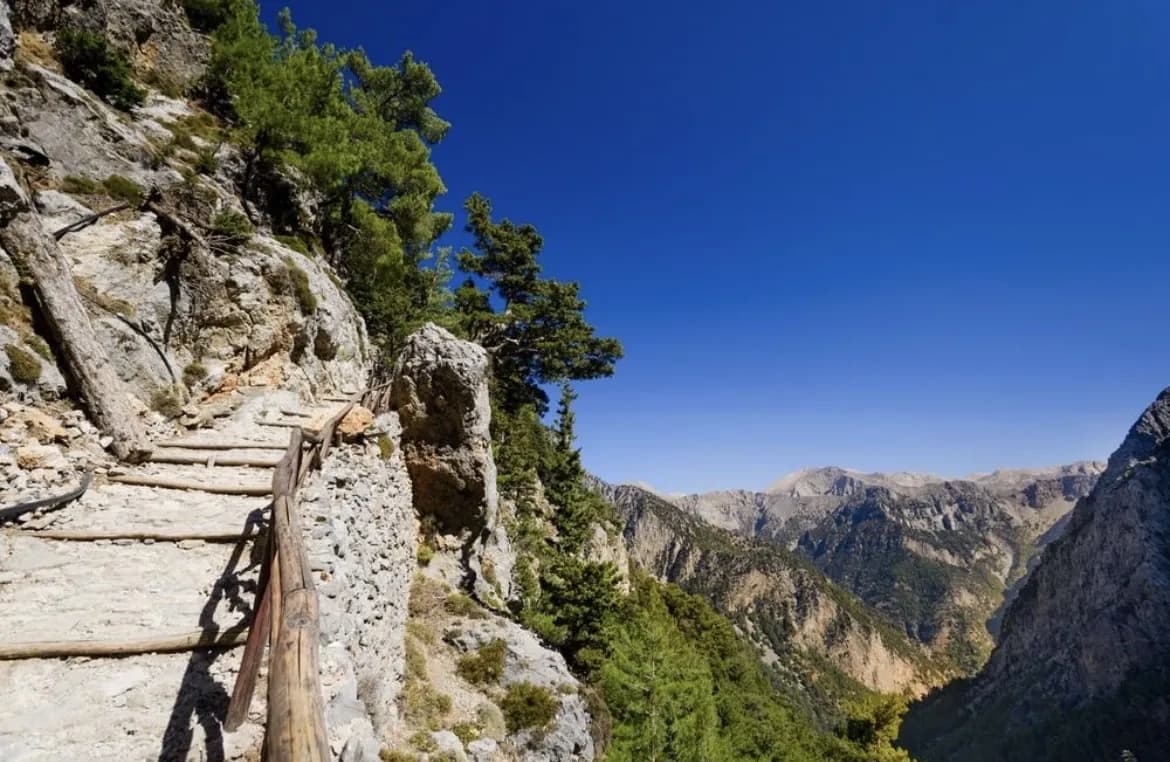
The coast between Sougia and Agia Roumeli is wild, quiet country, where traces of these centuries still stand above the shore. Our Sougia to Agia Roumeli hike follows the coastal path to Agia Roumeli, where the ruined fort looks out over the Libyan Sea.