Sfakia lies on the south coast of western Crete, where the White Mountains drop almost straight into the Libyan Sea. For most of its history there were no roads here. Villages were linked by mule paths and gorges, and the easiest way to travel was often by boat. That isolation shaped the people. Across Crete, Sfakians are known for their independence, their pride and their long memory.
A land that was hard to rule
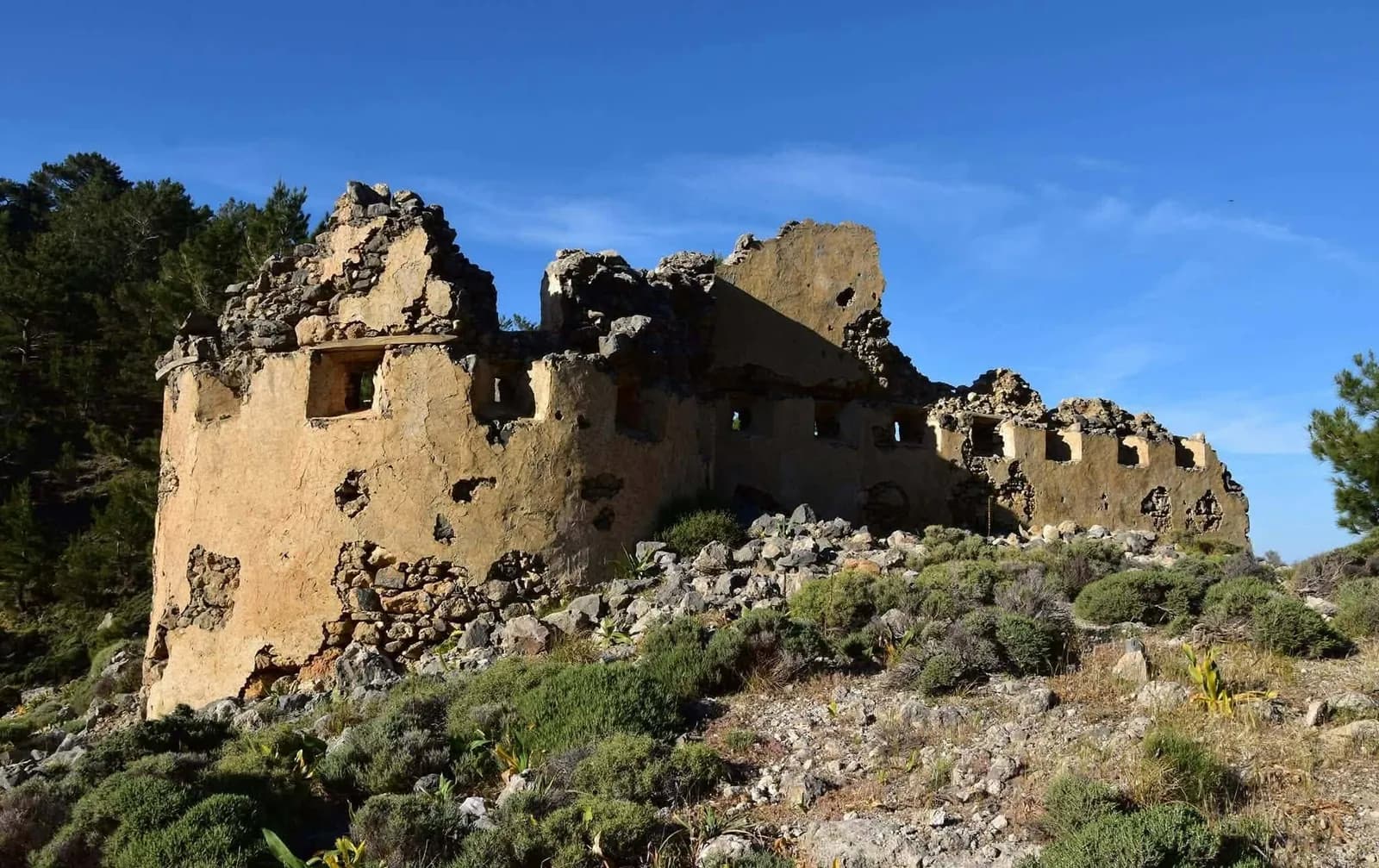
Venice ruled Crete from the early 13th century, and the Ottomans from the 17th. Both found Sfakia difficult. The terrain favoured the locals, who knew every path and cave, and an army could be stopped in a narrow gorge by a handful of men. In Venetian times the region saw repeated unrest. To keep an eye on it, the Venetians built a castle on the coastal plain in the 14th century, the one we now call Frangokastello. Under Ottoman rule Sfakia kept a degree of self-government for long periods and became a base for uprisings.
Daskalogiannis and Frangokastello
The best-known Sfakian hero is Ioannis Vlachos, called Daskalogiannis. He was a wealthy shipowner from Anopolis, and his nickname comes from "daskalos", teacher, a sign of his education. In 1770, during a war between Russia and the Ottoman Empire, he was encouraged by promises of Russian support and led Sfakia in revolt. The help never came. The Ottomans sent large forces into the mountains and the uprising was crushed. Daskalogiannis surrendered, hoping to spare his people, and was executed in Heraklion in 1771. He was flayed alive, and tradition says he bore it in silence. His story lives on in a long Cretan folk song that is still recited today.
The castle at Frangokastello, square with corner towers, still stands by the sea below the mountains. In 1828, during the Greek War of Independence, the Epirote leader Hatzimichalis Dalianis held it with a few hundred men against a much larger Ottoman army. He and most of his men were killed. A local legend grew from the battle. In late May, around dawn, a line of shadowy figures is said to appear on the plain and march toward the castle. People call them the Drosoulites, the "dew men".
1941: the road to the sea
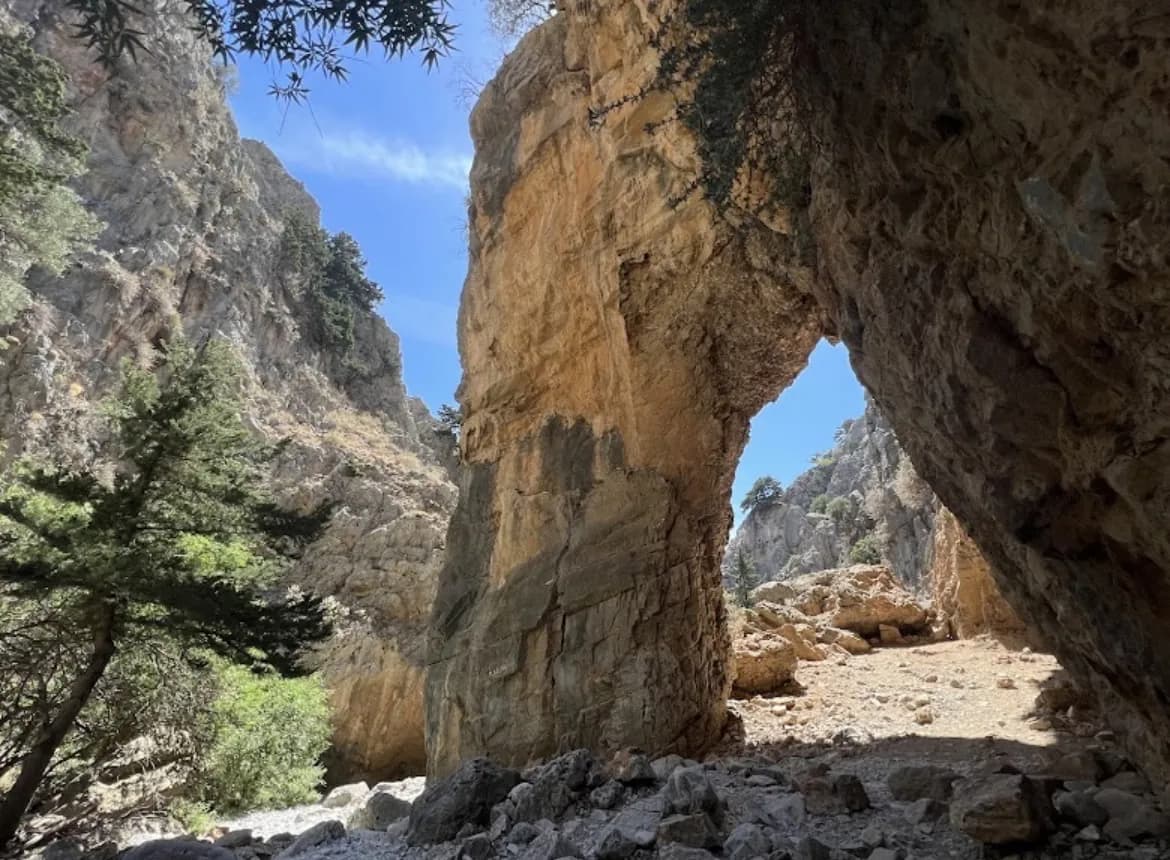
In May 1941, after the Battle of Crete, thousands of British, Australian and New Zealand soldiers retreated across the White Mountains to the south coast. Many walked down through the Imbros Gorge toward Chora Sfakion. Over several nights at the end of May, Royal Navy ships took off as many men as they could. Thousands had to be left behind. Many were captured. Others were hidden and fed by Cretan families at great personal risk, and some later escaped to Egypt by submarine or small boat.
Loutro
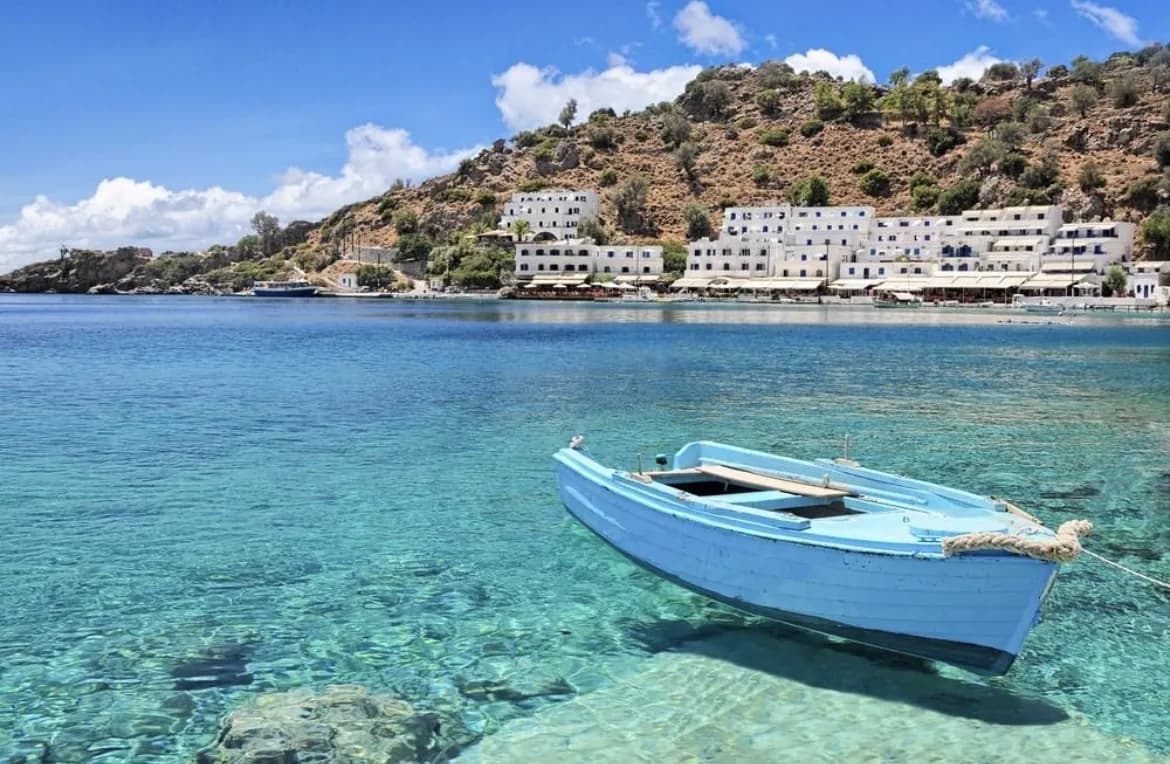
West of Chora Sfakion, Loutro sits on a small bay with white houses and blue shutters. There is no road. You arrive by ferry or on foot along the coastal path. In antiquity the bay served as a harbour for the area, and its sheltered water has always made it a safe anchorage on a rough coast. Today it is quiet, with a few tavernas, rowing boats pulled up on the pebbles and water so clear you can see the seabed far below.
Walk into the story
The best way to understand Sfakia is on foot. Our Agios Ioannis to Loutro hike follows the coastal E4 path past cliffs and coves all the way to Loutro. The Imbros Gorge hike follows the same route the soldiers took down to the sea in 1941.