Walk long enough in the White Mountains and you may hear it before you see it: a rattle of small stones on a cliff above the path. Look up and there it is, a goat with long curved horns standing on a ledge that seems far too narrow for it. This is the kri-kri, also called the agrimi, the wild goat of Crete.
A goat built for cliffs
The kri-kri is a wild goat with a light brown coat, a dark stripe along the back and, in the males, a pair of large horns that sweep backwards in a wide arc. Females are smaller, with short, slim horns. Both are astonishing climbers. They move across scree and rock faces with a calm that makes hikers feel clumsy.
Scientists still discuss its origins. The most widely held view is that the kri-kri descends from goats brought to the island by early settlers thousands of years ago, which then went back to the wild and adapted to the mountains. Whatever the exact story, it has lived on Crete for a very long time and is found nowhere else in this form.
Where it lives and why it is protected
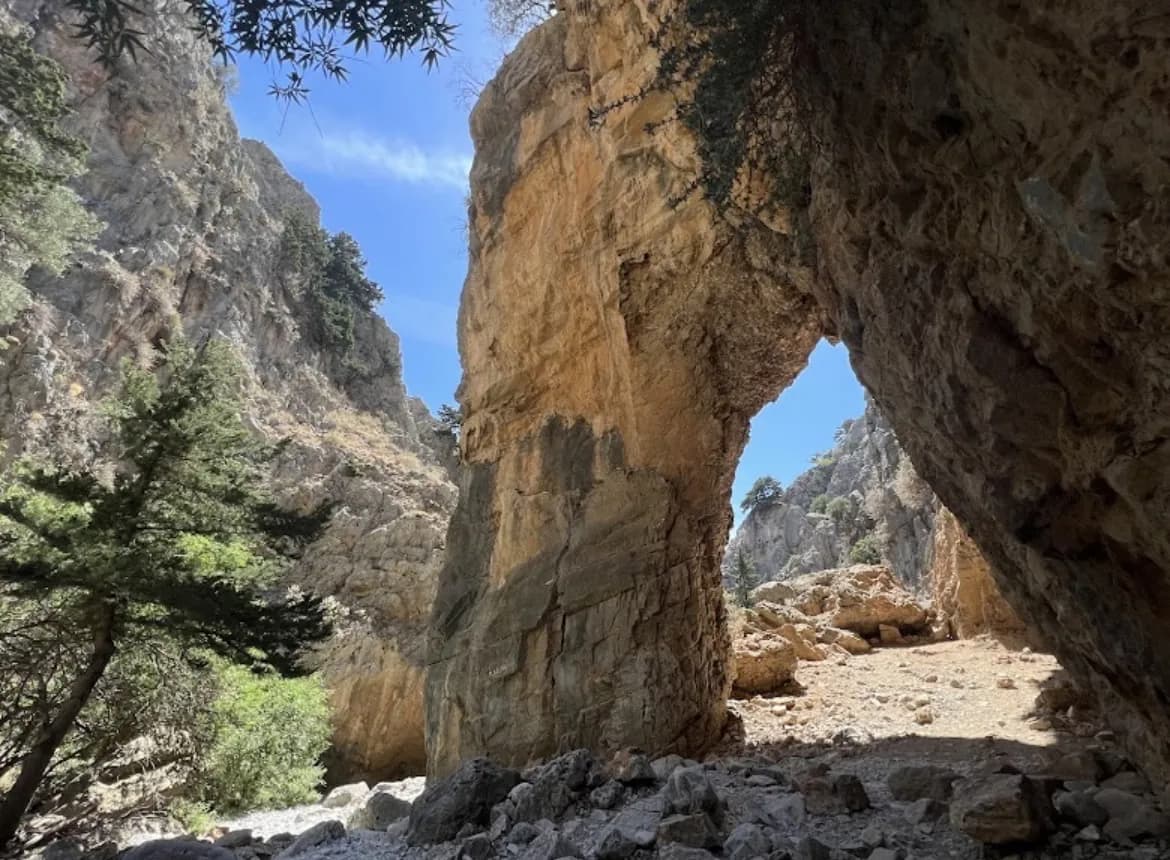
The main home of the kri-kri is the White Mountains, the Lefka Ori, in western Crete. Its stronghold is the Samaria National Park and the steep country around the gorge. Protecting the kri-kri was one of the main reasons the park was created in the 1960s. Small populations have also been established on a few islets off the Cretan coast, where they are safe from hunting and from mixing with domestic goats.
At one point the kri-kri came close to disappearing. Hunting pressure, loss of quiet habitat and crossbreeding with farm goats all reduced the pure wild population. Today it is a protected species and hunting it is illegal. Conservation work in the national park has helped the numbers recover, although poaching and hybridisation are still concerns.
A symbol of the island
The agrimi has been part of Cretan life since antiquity. Minoan artists carved it on seal stones and stone vessels, often in mid-leap. Much later it appears in Cretan folk songs and mantinades as an image of freedom and of the proud, untamed mountain spirit. Many Cretans see something of themselves in an animal that lives high up, keeps its distance and does not bow to anyone.
How to spot one respectfully
Your best chances are early in the morning or late in the afternoon, on rocky slopes above the trail. Scan the skyline and the cliff ledges rather than the path. In parts of Samaria Gorge some animals are used to people and may come surprisingly close. Please treat every sighting with care:
- Keep your distance and let the animal choose how close it comes.
- Never feed a kri-kri. Human food harms them and changes their behaviour.
- Stay quiet and avoid sudden movements.
- Watch for stones. Goats moving above you can knock rocks onto the trail.
See the kri-kri's mountains with us
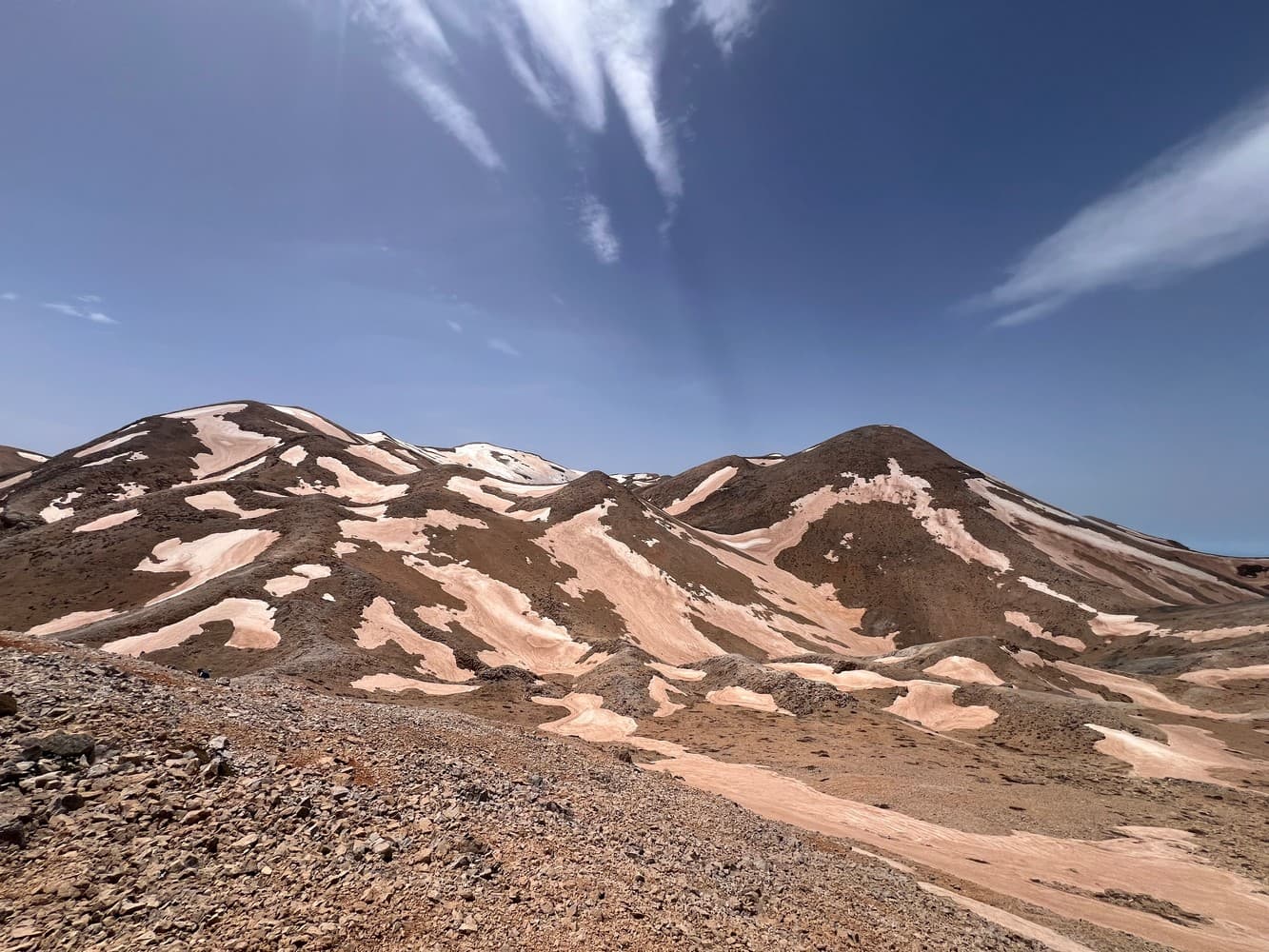
The kri-kri belongs to the high, rocky world of western Crete, and the best way to meet it is on foot. Walking through Samaria Gorge gives you a good chance of a sighting inside the national park. For a wilder day, our guided climb to the Pachnes summit crosses the bare high plateau of the White Mountains, where the agrimi has the slopes almost to itself. Our guides know where to look, and when to simply stop and watch.