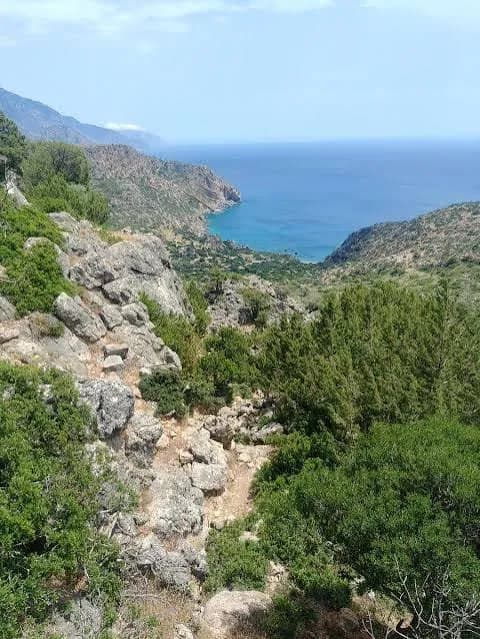
On the south-west coast of Crete, between Paleochora and Sougia, a narrow valley opens onto a small pebble bay. Among the carob and olive trees lie the remains of Lissos, an ancient city with a healing sanctuary that once drew visitors from across the region. There is no road. You arrive on foot along the coastal path, or by boat, and that is exactly why the place feels so peaceful.
A small port of the south coast
Lissos flourished mainly in the Hellenistic and Roman periods. It was one of the harbour towns of this rugged coast and, together with nearby Syia (today's Sougia), served as a port for the inland city of Elyros. Lissos was also part of the league of the Oreioi, a union of small mountain and coastal cities of south-west Crete. It minted its own coins, a sign that it was a real city with its own identity.
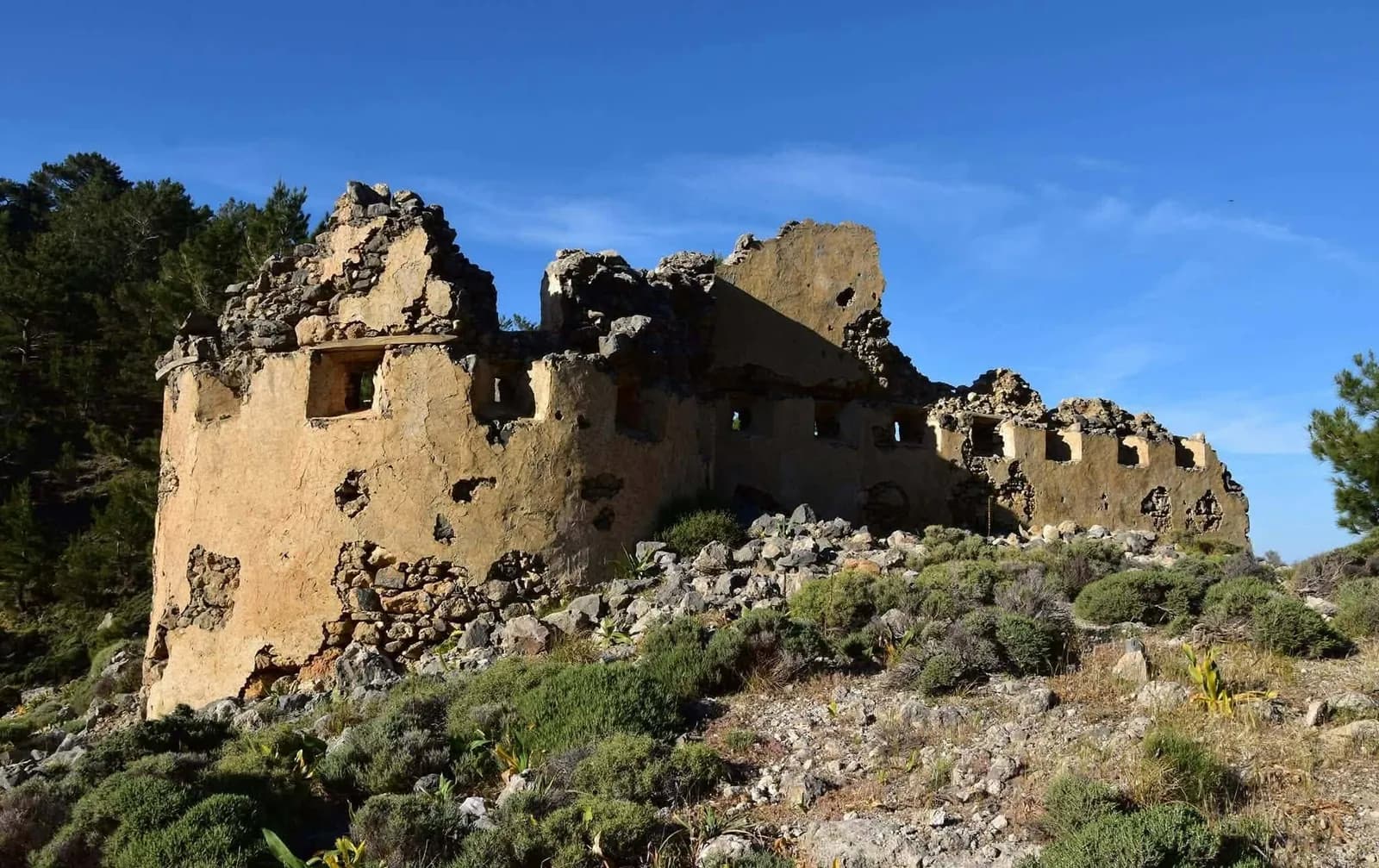
The city spread over the slopes of the valley. Today you can make out building remains, terraces and, on the western hillside, a cemetery of Roman tombs. Many of them are small vaulted houses for the dead, built of stone, which give that side of the valley a quiet, haunting look.
The sanctuary of Asklepios
The heart of Lissos was its Asklepieion, a sanctuary of Asklepios, the god of medicine. Like many healing sanctuaries, it was built beside a spring. The sick came to drink and bathe in the water, to pray and to make offerings, hoping for a cure. The sanctuary seems to have been an important one for western Crete.
The temple is small but well preserved at foundation level. Its best-known feature is the mosaic floor, made of small coloured pebbles laid in decorative patterns. When the site was excavated in the 20th century, archaeologists found statues and statue fragments, including figures of Asklepios and his daughter Hygieia. These finds are now in the Archaeological Museum of Chania.
Churches among the ruins
Life at Lissos did not end with the old gods. In the early Christian period basilicas were built here. Later, small chapels appeared in the valley. The church of Agios Kyrikos stands close to the Asklepieion and was partly built with stones from older buildings. The city seems to have faded in the early Middle Ages, like many settlements on this exposed coast, and the valley went back to shepherds and their flocks.
Getting there
Lissos sits on the coastal E4 path. Most people walk in from Sougia, climbing over the headland and down into the valley, or come along the longer route from Paleochora. Either way, the descent into the bay, with the sea opening up below, is one of the finest moments on the south coast.
Good to know
- Carry plenty of water. Shade is limited and the climb out of Sougia is steep in places.
- Wear proper hiking shoes. The path is rocky.
- Please do not walk on the mosaic or move stones. The site is protected.
Walk to Lissos with Crete it!
Our guided Paleochora to Sougia hike follows the E4 along this wild coastline and stops at Lissos, where your guide will show you the Asklepieion, the tombs and the chapels before you continue on to Sougia.