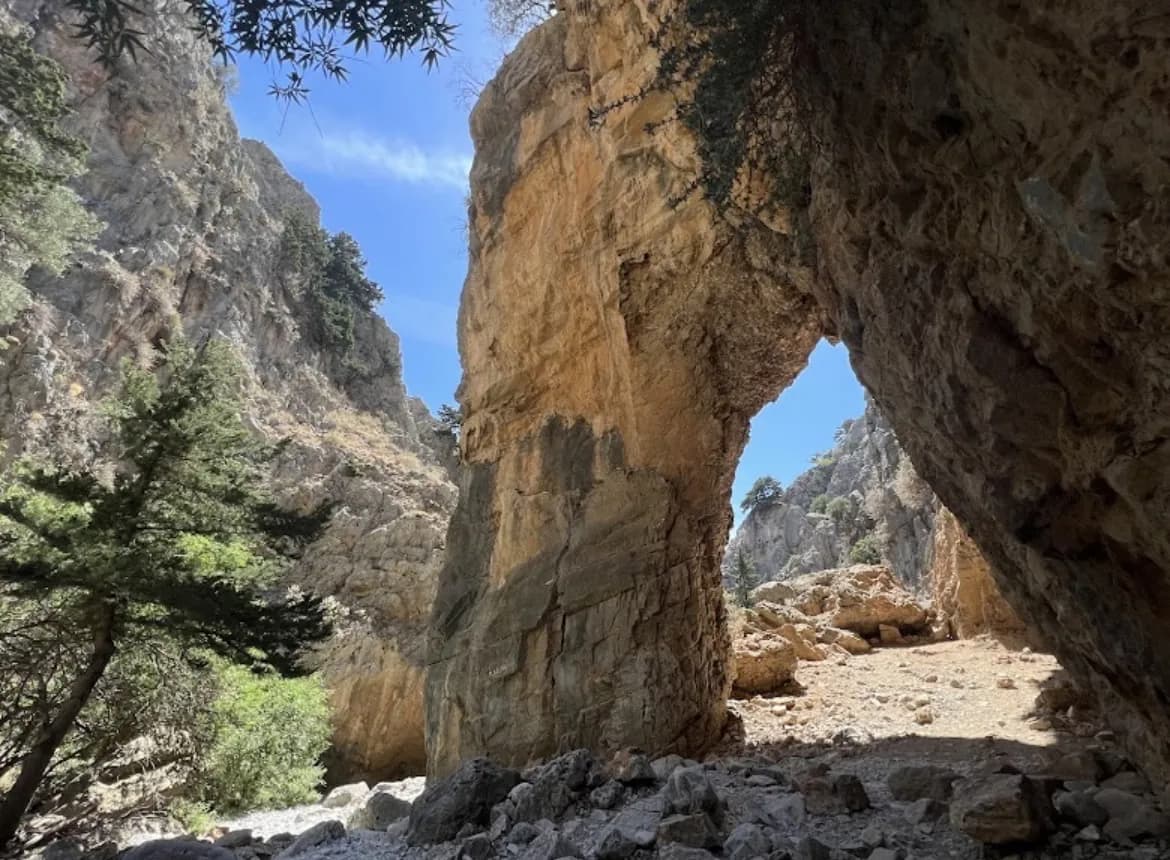

On a flat hilltop above Souda Bay, a few minutes from Kalyves, lie the remains of Aptera. It was one of the most important cities of western Crete in antiquity. Today it is a quiet, open site where you can walk among walls, cisterns and olive trees, with the sea on one side and the White Mountains on the other.
A very old name
Aptera's name is older than most of what you see on the hill. Linear B tablets from Knossos, written in the Late Bronze Age, mention a place called a-pa-ta-wa, which scholars generally connect with Aptera. So the name was already in use in Minoan and Mycenaean times.
The Greeks later explained it with a myth. The Muses and the Sirens held a singing contest here. The Sirens lost, tore the feathers from their wings and fell into the sea, where they became the small white islands in Souda Bay. "Apteros" means "wingless", and the islets are still called Lefkes, "the white ones".
The city-state
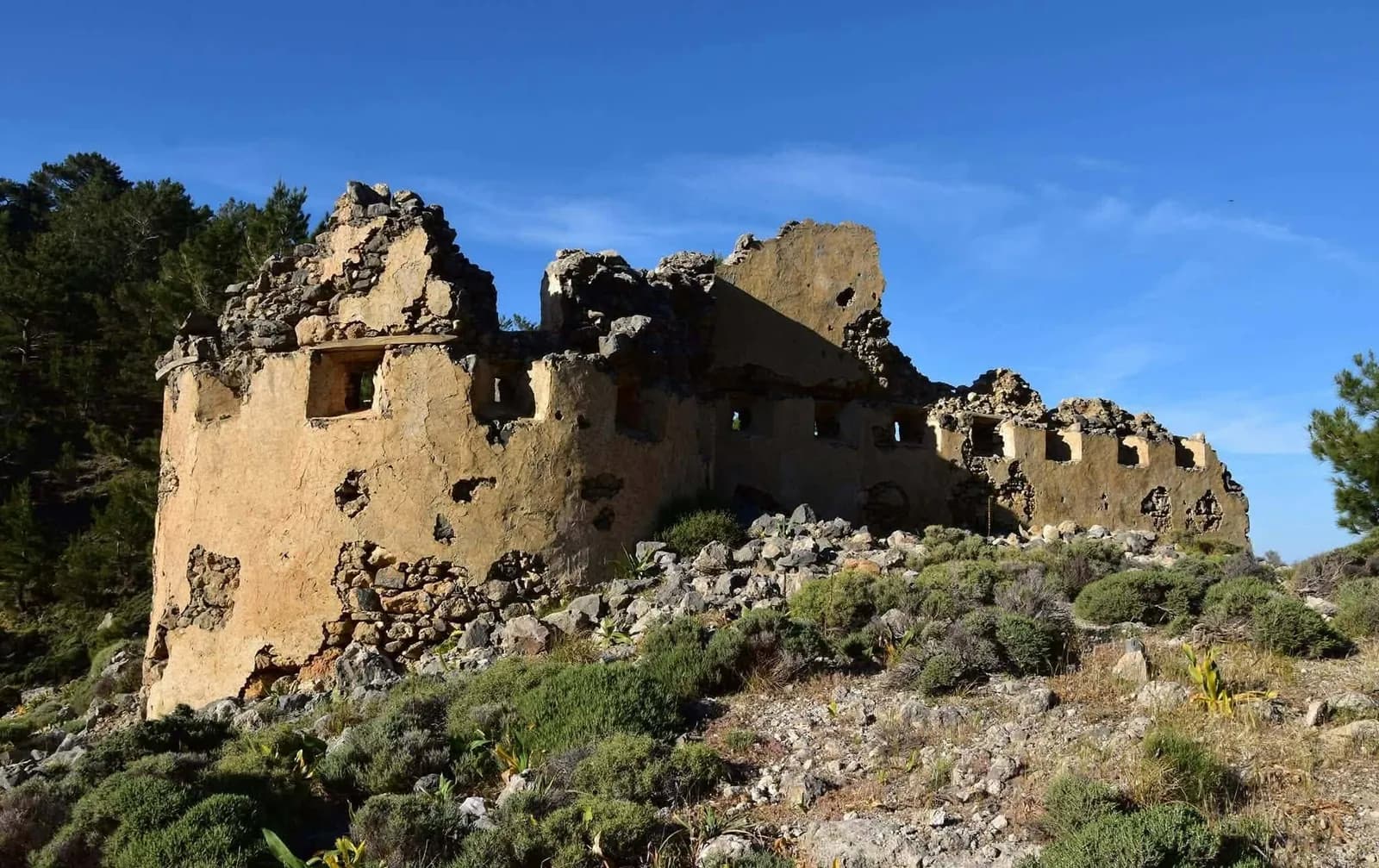
Aptera grew into a strong independent city in the Classical and Hellenistic periods. It had its own laws, minted its own coins and controlled harbours on Souda Bay below. A long defensive wall of large fitted stones circled the plateau, and parts of it still stand along the edge of the site. The city made treaties with other Cretan cities and with powers outside the island, as most Cretan city-states did in those centuries of shifting alliances.
Roman Aptera
After the Roman conquest of Crete in the 1st century BC, Aptera kept prospering. Much of what visitors remember comes from this period. The two great underground cisterns are the highlight. One is L-shaped, the other is divided into three long vaulted halls. Standing inside them, you get a real sense of the engineering it took to keep a hilltop city supplied with water through the dry summers.
Nearby are Roman baths, a sanctuary and a small theatre built into the slope, which has been carefully restored. The city remained inhabited into the early Byzantine period. Earthquakes and, later, raids along the coast are thought to have brought its decline.
The monastery of St John Theologos
In the middle of the site stands the monastery of St John the Theologian. Its origins go back to the Byzantine period, and it was later connected with the great monastery of St John on Patmos. Monks lived here until the 20th century. The simple church and courtyard sit right among the ancient ruins, a reminder that the hill never fully stopped being lived on.
Why go
Aptera is easy to reach, rarely crowded and full of variety: Bronze Age roots, a Hellenistic city, Roman water engineering and a Byzantine monastery, all in one walk. At the eastern edge of the plateau you also reach the Ottoman fortress of Koules, with one of the best views of Souda Bay anywhere.
Good to know
- Bring water and a hat. There is little shade on the plateau.
- Wear shoes with grip. Paths are gravel and uneven in places.
- Late afternoon light is beautiful here, and the heat is easier.
See it with Crete it!
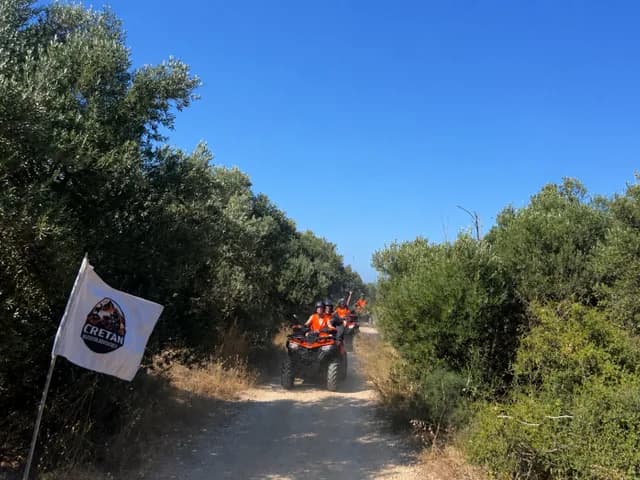
We know Aptera well because it is on our doorstep. You can reach it on foot on our Ancient Aptera trail, or ride up through the olive groves on the Sunset Quad, which ends at the Koules fortress as the sun goes down over Souda Bay.